
If there’s one conversation in the marketing community that I'm growing tired of right now, it’s the one around how AI is the key to unlocking hyper-personalised content at scale.
It’s true, algorithms can dissect consumer data, predict desires before they're even articulated, and can be leveraged to deliver tailor-made experiences to boost engagement, conversions, and loyalty.
But I think that this obsession with AI-fuelled personalisation is a ticking time bomb.
It's not just overhyped - it's actively eroding trust, overwhelming audiences, and setting the stage for a backlash.
Although I’m sure brands will see a bump in the short term, the winners in the long-term will be those who double down on authentic, more human-driven content and experiences.
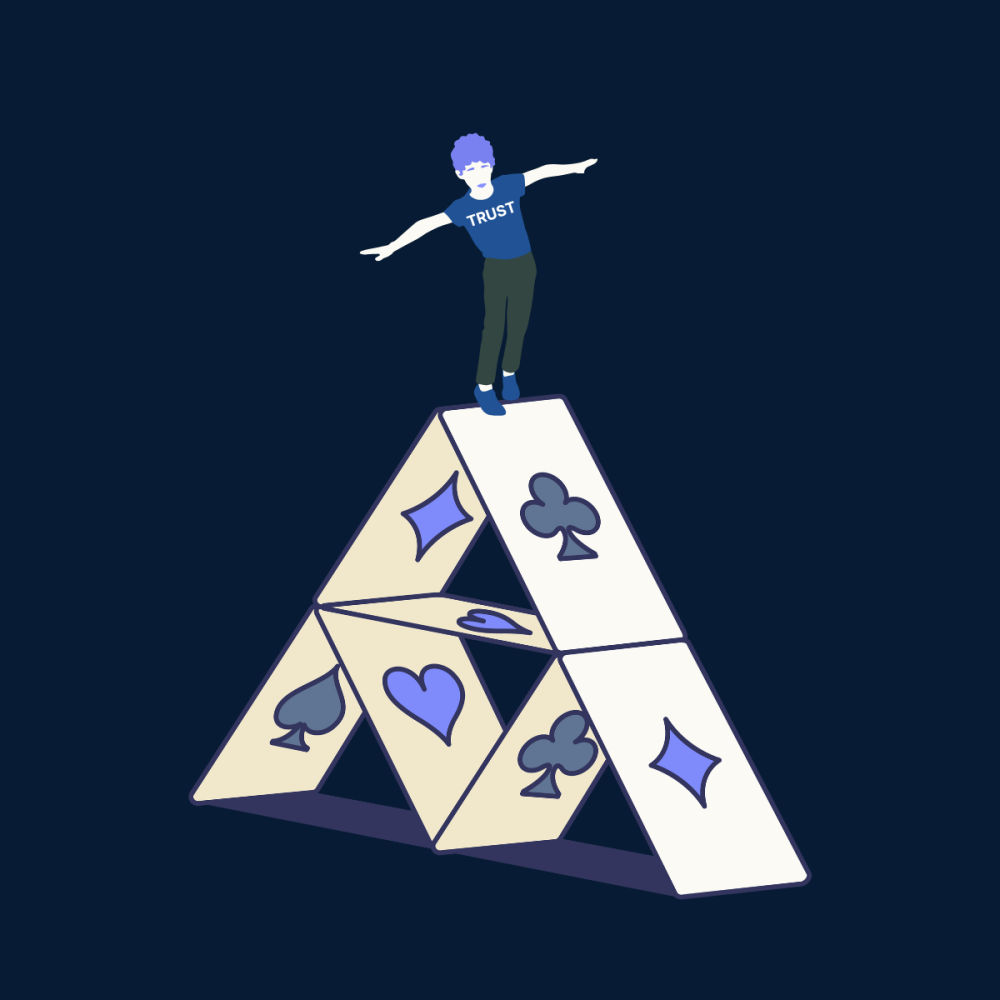
AI Driven Content is a House of Cards, Jed Casey (2025)
A House of Cards
On the surface, the benefits seem clear. AI enables businesses to analyse vast datasets in real-time, crafting messages that feel eerily bespoke.
Enhanced customer loyalty through timely, relevant offerings? Check.
Controlled costs and improvements in retention? Done.
Generative AI tools are scaling this to new heights, allowing companies to personalise online interactions in ways they weren't able to before. In fact, 61% of consumers now demand hyper-personalised experiences, and AI is positioned as the ultimate enabler.
But dig deeper, and cracks appear. AI-generated content often falls flat on authenticity - it's prone to biases, hallucinations, and a genericness that screams "algorithm" rather than "human insight."
No matter how sophisticated, it struggles to create truly audience-specific messages without human refinement. And as adoption surges, we're drowning in a sea of 'personalised sameness': ad fatigue is rampant, organic reach is plummeting, and consumers are tuning out the noise.
The Tipping Point is Coming
Signs of saturation are already showing. AI fatigue isn't a buzzword - it's a reality costing brands engagement and trust. From gaming to social media feeds clogged with AI influencers and "slop content," backlash is building.
Consumers are weary of being sold to via flawless but soulless videos and posts, they crave something more genuine and trustworthy. This isn't just anecdotal. A 2025 survey revealed 72% of U.S. adults harbour concerns about AI, including privacy intrusions and misinformation.
Brands have faced swift criticism for undisclosed AI use in promotions, highlighting ethical pitfalls like carbon emissions, copyright infringement, and spreading falsehoods. Even tech-forward sectors are recoiling: thousands of artists and creatives have signed statements against AI content scraping and some companies are promising AI-free ads to rebuild trust.
On the regulation side the hammer is falling. The murky copyright implications of generative AI are fuelling lawsuits against firms like OpenAI, while global bodies push for mandatory labelling and ethical guidelines. In the EU, the AI Act is tightening scrutiny on high-risk applications, including marketing tools that manipulate consumer behavior. Even if some of these big cases fall through from a legal perspective, it doesn’t mean they haven’t touch a deep human nerve.
Culturally, we're witnessing a resurgence of "organic content" as premium: User-generated stories surging in appeal as social proof, with search interest in "social media authenticity" up over 225%.
As one X user pointed out, "As soon as someone knows what they’re reading is written by AI they lose all emotional interest." @adammcarter
My prediction? In 2026 we'll hit a tipping point. Overwhelmed by AI overload, I think consumers will revolt, demanding transparency and more 'human-ness'. Brands who ignore this risk alienating audiences who will increasingly want to buy from people, not perfectly programmed robots.
Scale Authentic Stories, Not Personalised Content
There’s a silver lining: in an AI-saturated world, your authentic voice becomes a superpower. As all good marketers know, people don't just want products - they want relationships, stories, and emotional connections.
Consumers crave human-centered narratives. Brands like Apple under Steve Jobs thrived on vision and storytelling, not algorithmic content dumps.
So what should we be focusing on instead?
- Remember that personalisation is not the goal, connection is: Personalisation was only ever a means to an end, and it’s certainly not the only path to connection.
- Keep Story Telling at the Centre: Stories are the OG of scaling - they’re how humans have scaled ideas for thousands of years. Double down on story telling.
- Prioritise Human Creators: By all means leverage AI for other parts of marketing but let humans craft the core message (AI can still be a great sparring partner here). Your unique perspective and point of view are what creates connection.
- Build Trust Through Transparency: Label AI involvement clearly to avoid backlash, and proudly highlight the human components of your work. This might not be a widespread thing yet, but it will be.
- Foster Genuine Connections: Keep investing in community-building, user-generated content, and experiences that make customers feel 'seen' rather than 'targeted'.
So while some people might be chasing AI scale, I’m betting on human depth.
No one knows for certain where this AI wave is taking us but we can at least take a stand for how we’d like the world to be - I’d like mine to be unmistakably human thanks : )